Showing posts with label Natures Fact-File. Show all posts

Environmental Degradation: Causes, Effects, Remedies and Conclusion


INTRODUCTION :

          'Environmental degradation' is referred as a process in which the natural resources and environment is compromised/depleted in some way, reducing biological diversity and the general health of the environment. Environmental degradation can be entirely natural in origin, or it can be accelerated or caused by human activities.
          Environmental degradation is an umbrella concept which covers a variety of issues including : Pollution, Biodiversity loss and Animal extinction, Deforestation and Desertification, Global Warming, and a lot more.
          The state of our environment has been deteriorating for at-least the past couple of centuries, and virtually every part of the planet has been touched by this process by one way or another. It would be no exaggeration to say that environmental degradation was jump-started by the industrial revolution that took place in the 19th century.

CAUSES : 

          There are basically two factors that lead to environmental degradation :
  •  Natural factors : It includes Droughts; Storms on sea,land and deserts such as Hurricanes, Tornadoes, Catrina and Volcanic eruptions. These factors lead to land degradation caused by erosion.
  • Man-made factors : It includes Deforestation, Industrialization, Urbanization, Economic growth, Population growth, Intensified agriculture, Rising energy use and transportation. These factors mostly leads to Air, Land and Water pollution.

EFFECTS :

  1. The main effect or "consequence" of our complete disregard for the natures stems from the inability of air, water and land to deliver undisturbed environmental services required all living organisms.
  2. Polluted air, water and land bring about disease and endless misery to humans, animals and plants.
  3. In many countries crop harvest are falling as consumption increases. People don't get nutritious food to eat.
  4. Losing the Earth's beauty.
  5. Global warming.

REMEDIES : 

         We can help save our environment by doing following things :
  1. Reduce pollution.
  2. Reduce pesticides, practice organic farming.
  3. Protect natural habitats.
  4. Reduce deforestation, increase tree plantation
  5. Develop alternative energy sources.
  6. Purchase recycled products.
  7. Conserve water
  8. Do not litter or toss waste into public places and other inappropriate places .
  9. Make people aware about environmental degradation, it's effects and remedies.
  10. Protect animals


CONCLUSION :

          The damage that we cause to the environment is currently not counted as a cost in economic and social terms. This lack of "environmental value" has allowed us to over-exploit "free natural resources" which are of-course not free.
          We have to change this paradigm of our interaction with the environment. The nature doesn't owe us anything. It is not there for us to 'control' and 'manage' it either. We were born to live in harmony with it indeed, we are a big part of it. And we certainly don't have right to exploit and destroy it without thinking about the future generations of humans and animals. Who will be here after us.

SANDALWOOD PLANT : Know The Amazing Health Benefits It Can Offer!


Scientific Name : Santalum album
Family               : Santalaceae
Regional Name  : Chandan ( चंदन )


CLASSIFICATION:


Kingdom
Plantae
Phylum
Tracheophyta
Class
Magnoliopsida
Order
Santalales
Family
Santalaceae

 
Sandalwood is obtained from heartwood of Santalum album belonging to family 'santalaceae'.


GEOGRAPHICAL SOURCE:
          The plant is found in India and Malaysia. Sandalwood tree is an evergreen plant of 10-12m in height. It is widely distributed in different parts of India,especially South India.
          The plant bear beautiful flowers and fruits. Generally the tree of more than 25 years old age is normally selected for collection of volatile oil. volatile oil is present in all parts of sandalwood plant but it is concentrated heartwood region of plant. 


MACROSCOPIC CHARACTERS:
          The matured of fully grown plant is uprooted and the bark from the stem and root is removed along with the sapwood. The heartwood is yellowish or pale red in colour. The heart wood is cut into small pieces. The processed by stem distillation process. It contains 2.5% volatile oil which is colourless to pale yellow in coloured viscid liquid.


CHEMICAL CONSTITUENTS:
          
          The oil of sandalwood contains about 95% of 2 isomeric sesquiturpene alcohol, they are  α-santalol and ß-santalol
Related image

USES:

1. Skin Care Benefits Of Sandalwood Powder
  • Prevents and cures pimples
  • Reduces wrinkles and signs of aging
  • Heals dry skin
  • Enhances skin brightness
  • Removes blemishes
  • Exfoliates the skin
2. Traditional/Ethnobotanical uses

  • Sandalwood oil has a warm, woody odor. Hence,it is commonly used as a fragrance in soaps, incense, perfumes, and cosmetics. It is also used as a flavor for foods and beverages. The wood os sandalwood is dense, thus it has been greatly valued for carving purpose. 
  • In traditional medicinal methods, sandalwood oil has been used as an antiseptic and astringent. It is also used for the treatment of stomachache, headache, and urinary and genital disorders. 
  • In India, the emulsion, essential oil, or paste of sandalwood is used in the treatment of eruptive and inflammatory skin diseases. The leaves and bark of sandalwood were used by early Hawaiians to treat lice, dandruff, sexually transmitted diseases, and skin inflammation. 
  • Sandalwood oil has also used to protect crops. It is demonstrated repellency against the crop pest Tetranychus urticae (two-spotted spider mite).


  Some Beneficial Products of Sandalwood:
  • In US : Click on image to purchase or learn more.
                      
                   
  • In India : Click on image to purchase or learn more.
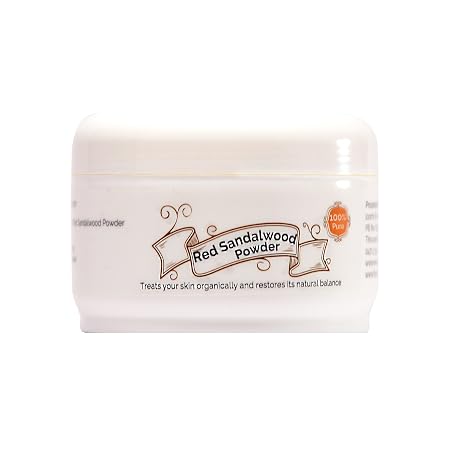
   Looms & Weaves Ayurvedic Natural Red Sandalwood Powder Raktha Chandan - 100Gm    Kama Ayurveda Red Sandalwood Ayurvedic Soap with Pure Sandalwood Oil, 125g           


Also Read:


Neem (Indian Lilac) : General Information and Medicinal Properties

Azadirachta indica


Image result for neem

Common Names :

English         : Indian Lilac, Neem
Hindi            : Neem
Sanskrit        : Pakvakrita, Nimbaka
Gujarati        : Dhanujhada, Limba
Malayalam   : Ariyaveppu
Marathi        : Kadu Limba, Nimbay
Tamil            : Veppai
Urdu             : Neem


Classification


Kingdom
Plantae
Division
Magnoliophyta
Order
Sapindales
Family
Meliaceae
Genus
Azadirachta
Species
A. indica


Distribution and Habitat 


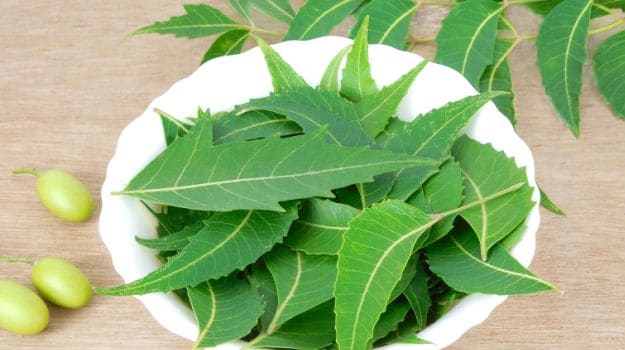
It is native to India, Sri Lanka, Burma and Pakistan. It is a fast-growing tree that can reach a height of up to 15-20mtrs. , rarely 35-40mtrs. It is evergreen tree but under climatic conditions like severe drought, it may shed most or nearly all of its leaves. The bark is hard, fissured or scaly and whitish-grey to reddish-brown in colour. The sapwood is greyish-white and the heartwood is reddish when first exposed to the air becoming reddish-brown after exposure. The alternate, pinnate leaves are 20-40cms long with 20-31 medial to dark green leaflets about 3-8cms long. The shape of the matured leaflets is more or less asymmetric, and their margins are serrated. The flowers (white and fragrant) are arranged axillary, normally more or less drooping panicles which are up to 25cms long. An individual flower is approximately 5-6mm long and 8-11mm wide . Fruit is a glabrous olive-like drupe which varries in shape from elongate oval to nearly roundish.


Chemical Constituents 


The healing properties of Neem (Indian Lilac) are mainly due to some bitter substances, known as triterpenes (limonoids), with azadirachtin as one of the main active ingredients. Also Neem contains beta-sitosterol, tannins, polysaccharides, flavonoids, and essential oil.The other components include nimbin, nimbinin, and nimbidin. The latter is identified as the primary active antibacterial ingredients and highest yielding bitter components in the Neem oil. 


Medicinal Uses 


Neem products are known to be antihelmintic, antifungal, antidiabetic, antibacterial, antiviral, contraceptive, and sedative. The oil from the seeds is often mentioned as margosa oil. Neem oil is used for healthy hairs, to improve liver function, detoxify the blood and balance blood sugar level. Neem leaves have been very effective against skin diseases like eczema, psoriasis, etc. The extract has been used internally as treatment for asthma, sore throat, tuberculosis, eczema, jaundice, stomach ulcers, arthritis, and rheumantis. The bark is bitter and has astringent properties, and decoction made from it can be used as remedy for haemorrhoids. Aslo, it is sometimes used to treat hepatitis A and B, and 'mono' or 'the kissing disease' (mononucleosis), caused by the Epstein-Barr virus. Studies have shown that the neem oil does have anti-inflamatory and bactericidal properties and that is at least to some extent, can be used to reduce high fever and high blood sugar.


Source: Medicinal & Aromatic Plants Abstracts ( NISCAIR )


SOME BENEFICIAL PRODUCTS OF NEEM

  • In India -


  • In US -


'Tulasi' An Important Plant: Medicinally and Ritually.

                    Image result for tulsi


INTRODUCTION:

   Ocimum sanctum is commonly known as ‘holy basil’, ‘tulsi’ (sometimes spelled ‘thulasi’) or tulsi, is an aromatic perennial plant in the family ‘Lamiaceae’. It is native plant of the Indian subcontinent and widespread as a cultivated plant throughout the Southeast Asian tropics.

         Tulasi is cultivated for its essential oil and for religious and traditional medicine purposes. It is widely used as an herbal tea, commonly used in ‘Ayurveda’, and has a place within the Vaishnava tradition of Hinduism, in which devotees perform worship involving holy basil plants or leaves.


CLASSIFICATION:


KINGDOM:                Plantae

SUBKINGDOM:        Viridiplantae

INFRAKINGDOM:    Streptophyta

SUPERDIVISION:     Embryophyta

DIVISION:                 Trachaeophyta

SUB-DIVISION:        Spermatophytina

CLASS:                      Magnoliopsida

SUPERORDER:          Asternae

ORDER:                      Lamiales
 
FAMILY:                     Lamiaceae

GENUS:                     Ocimum L.

SPECIES:                   Ocimum sanctum L.


BIOLOGICAL AND GEOGRAPHICAL SOURCES:

         Tulsi plant consist of fresh and dried leaves of Ocimum sanctum, belonging to family ‘Lamiaceae'
        It is herbaceous plant, branched, annual and found throughout the India. It is considered as sacred plant by Hindus. The plant is commonly cultivated in garden and grew near the temples. It is propagated by seeds.


MACROSCOPIC CHARACTERS:

         The plant grows up to 30 to 75 centimeter in height. Entire plant of tulasi have medicinal properties, especially fresh and dried leaves.
         Leaves are oblonged, acute with serrate margin, pubescent on both the sides and gland dotted. Leaves are green in colour with aromatic smell and pungent taste, flowers are purple in colour and seeds are reddish black.


CHEMICAL CONSTITUENTS:

         Tulsi leaves contains bright yellow colored and pleasant volatile oil (0.1 to 0.9%). The oil contains Eugenol (70%), Carvacrol (3%) and Eugenol methyl ester (20%).
         It also contains cryophillin. The plant is also reported to contain alkaloids, Glycosides, Tannins, vitamin C and traces of citric acid and tartaric acid.


MEDICINAL USES:
  • The fresh leaves, its juice and volatile oil of tulsi are used for various purposes.
  • Tulsi oil has an antibacterial and anti-insecticidal property.   
  • Leaves are used as stimulant (It can improve appetite) to digestion, aromatic and diaphoretic (Used for kidney problem). 
  • The juice is used as important constituent for several preparations of skin and ear care.
  • The hot extract of leaves is used as stomachache.
  • In general tulsi drug is considered as good immune modulatory agent.

  • SOME POPULAR TULSI PRODUCTS : 

    In India : Click on Image to purchase or Learn more


    In US : Click on Image to purchase or Learn more